|
Note: This document is a continuation of Part Three.
More Specific Observations, continued
The operations at the sorting corrals were similarly sensibly conducted. Any time wild horses are sent through chutes there will be some banging against the panels as a bolder horse wedges past a more timid horse or a horse turns around and tries to go against the flow. However a calm and organized approach to keeping these animals moving in these more confined spaces without overly exciting them is safer for both the animals and the people handling them. The contractor doesn't benefit from getting an animal or wrangler hurt and our observation was of a cool headed, synchronized operation.
Sorting chute in foreground, studs in the background.
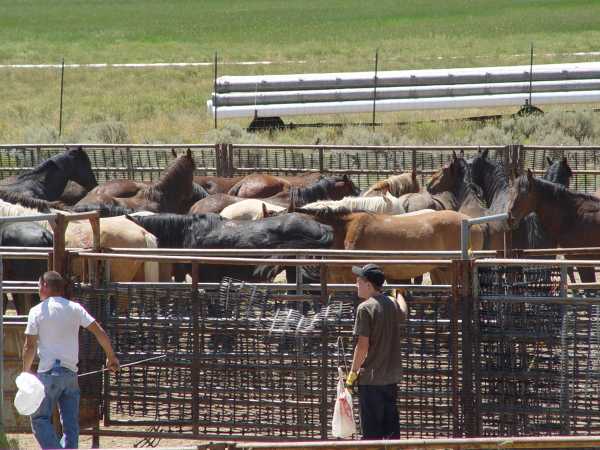
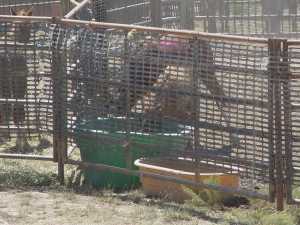
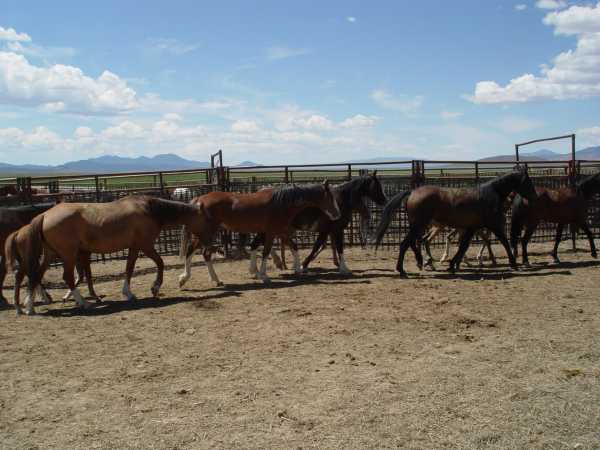
A reasonably reliable indicator of how well any operation is going that involves wild horses involves the behavior of the animals being handled. A high degree of stress or agitation is generally not a good sign. Horses displaying more calmness or curiosity suggest things are running pretty well. The wranglers could "paint" some of the weanlings in the chute by just standing in the chute with the horses and without having to "squeeze" them. One youngster decided that it would be great fun to play in the paint bucket and made a mess. The nursing mares and foals settled as soon as they were reunited. The yearlings were pretty curious and would come over to the fence if we stood there quietly. There was a little predictable jostling in the stud pen but we didn't see any serious fights break out.
The wayward stray shown in Part Three is relaxed with its dam.
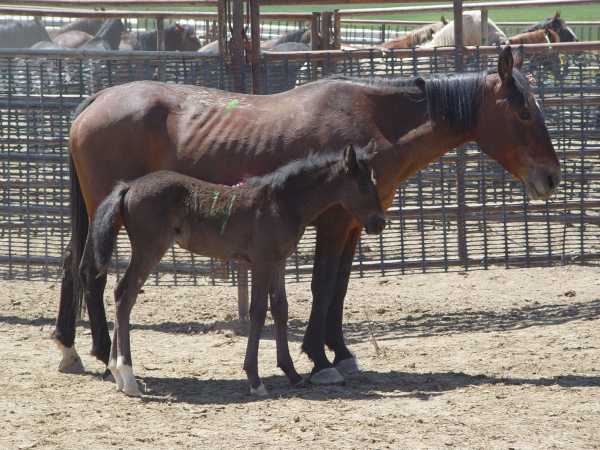
A few horses were released from the sorting corrals. These were generally older horses where it was decided they should just live out their remaining lives in the complex. The wranglers bobbed their tails (cut off about a foot of hair) so that the pilot would recognize them as released animals and wouldn't try to move them back into the trap. The sorting corrals were within sight of the water hole. When things were quiet one released horse actually would wander back to the sorting corrals to sample some of the hay that was being fed to the horses inside.
Mare and foal reunions.
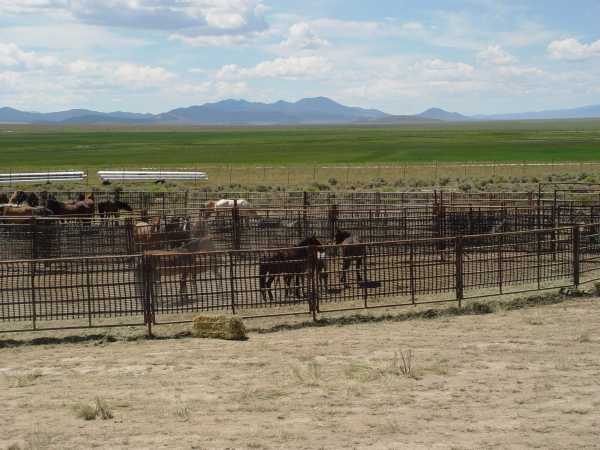
Fairly relaxed "body language" shortly after mares and foals were reunited.
We should point out that in observing about 150 horses in the various corrals only one foal appeared to be very young, perhaps a month old. This foal and its dam were kept in a separate "nursery" pen to prevent the youngster from being accidentally struck or trampled by other mature horses. The rest of the current foal crop were already pretty well developed.
We also observed the crew releasing a few older horses back onto the range. Before releasing them, someone on the crew would "bob" each horse (cut about a foot of hair off its tail) so it would be recognized by the pilot as being a turnback and not be brought in again.

|