|
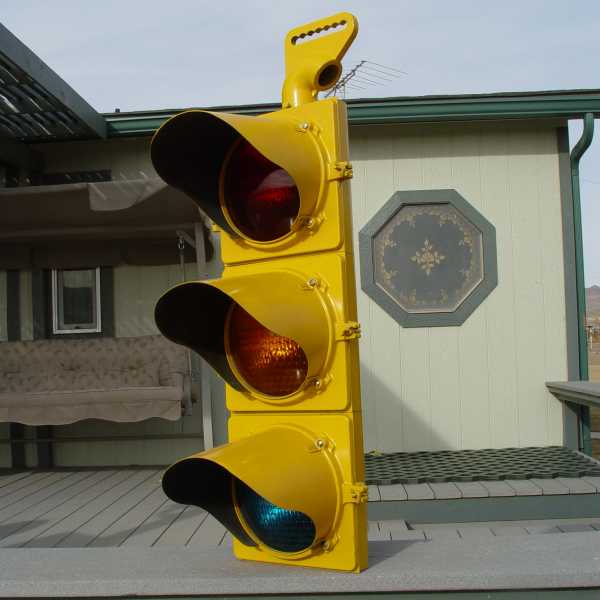
I came into collecting with a few advantages. I had actually worked on traffic signals and street lights and installed them over city streets. I was a competent electrician and understood how things should be wired to work correctly and safely. However I still started my "collection" with a fairly late model aluminum body Marbelite that came with all its necessary components.
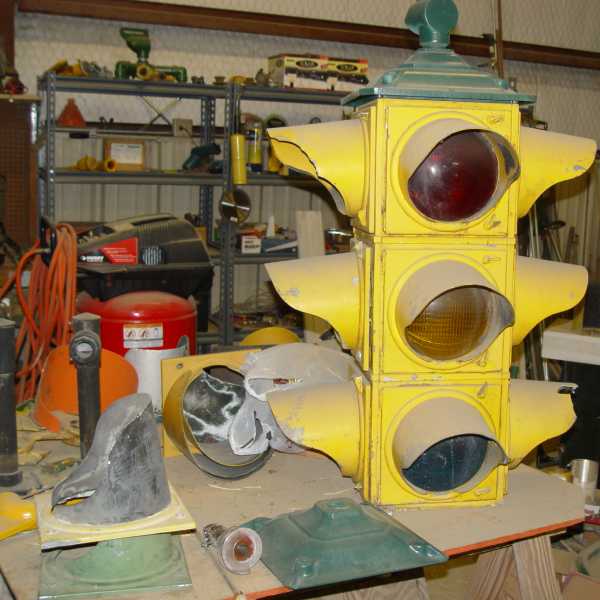
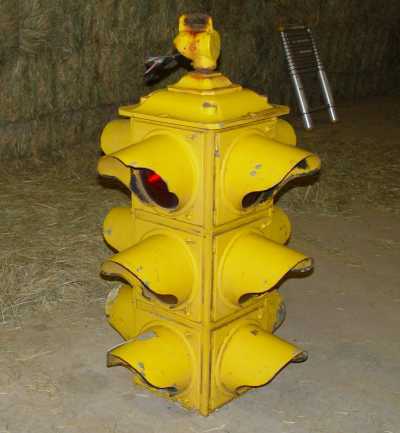
After acquiring a couple more "late model" signals I jumped on a pretty rough Crouse-Hinds DT fixed 4-way on eBay. It was a heap of frozen door latches, screws and bolts. A couple of visors were broken in shipping. I broke a glass mirror reflector trying to get the thing apart. I'm still working on this signal!
I learned to ask questions of folks offering signals. Do all the latches work? Are all the reflectors present and intact? Will the doors and reflectors open and shut correctly? Are all the pieces there? Even then I got burned when a DT 4-way in spectacularly good condition arrived in pieces, having been dropped by UPS. Now I make sure that the seller knows how to properly pack a signal or I actually send a proper shipping carton in which the signal can be sent.
Here are my suggestions for new collectors.
- Start with late model signals. Polycarbonate (plastic body) signals make good starting signals since they are light weight, relatively easy to restore and still look cool when displayed. Make sure that the seller verifies that the bodies are not cracked and that all lenses, reflectors, visors and wiring block are present.
-
Study prices for a while on such places as eBay. Get a sense as to what certain signals are worth before you jump in and bid.
-
Know what size signal you are getting. Some sellers on the on-line auctions aren't real savvy about describing their stuff. A signal with 12 inch lenses is gigantic as compared with a signal that has 8 3/8 inch lenses. Don't accidentally wind up with a signal that is too large to display!
- On places like eBay, check the seller's feedback. Rip-offs are often hard to deal with and the auction house's "refund" policy usually covers only a percentage of the auction price and none of the shipping costs. Stick with sellers who have really good feedback scores.
- Watch the shipping costs. Some sellers will double or even triple actual shipping costs. If a listing has vague shipping costs, get a commitment from the seller on a shipping cost limit before you commit to buy.
|
Click photos to bring up
full sized images in a new window.
My first signal. Just needed fresh paint.
This signal was more than I bargained for!
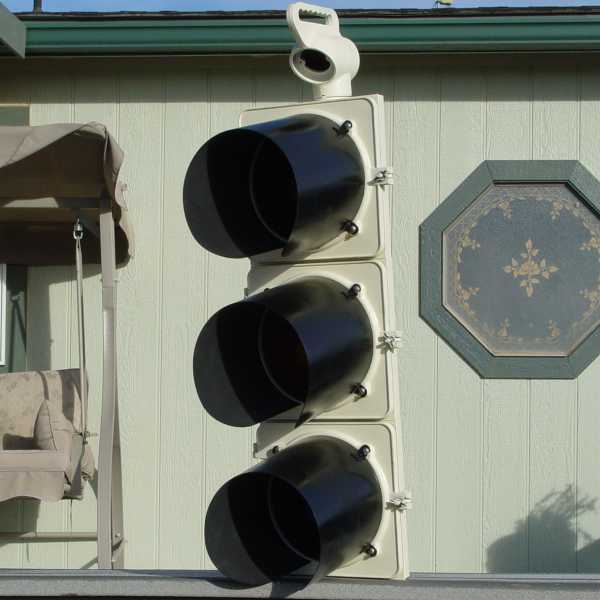
A Crouse-Hinds aluminum Type R.
Another relatively easy signal to restore.
|