Taming and Training
|

|

Safe, sane and reliable approaches to taming and training a wild horse.
|
PLEASE READ FIRST!
I'm a person who tends to jump right into the "get it done" part of any project. However horses present a different kind of situation. Oftentimes the keys to success don't lie so much in knowing what to do as they do in knowing why.
Although taming and training wild horses has a relatively good safety record when compared to equestrian activities as a whole, being in a confined space with a large animal has its risks. It is critical to maintain focus and avoid distractions. Using proper safety gear is critical. We could write pages on the importance of proper shoes or boots, gloves and helmets. Too many horse clinicians on TV seem obligated to appear macho and wear cowboy hats. Such presentations constiute unsafe role models and are a disservice to their clientele. A cowboy hat will not contain your brains if you have an accident.
Finally, taming and training a wild horse is somewhat like building a house. Making sure that the ground is prepared, the forms are correct and the concrete is properly poured is generally a lot less trouble than trying to correct a problem after the house is built, has settled and starts to tilt. Most of us want to get on and ride, but there is a bit of preparation necessary in order to reasonably ensure that our rides produce the desired outcome. Back to that "why" business again, as you learn "why," then you'll have a pretty good idea what to do and why proper preparation is so important. |
 There are so many variables when it comes to gentling wild horses that there is not room to print all the possible "whats," even if we knew them all. However once we start to understand the "whys," we can choose the appropriate "what" (to do) or even engineer our own solution when gentling and training our horses. It is important to carefully consider any advice that comes your way, even what is presented here. A great number of training approaches and techniques apply to specific circumstances and may produce undesirable results in others. As a trainer you are responsible for deciding on what advice to follow and techniques to use. Understand "why" and make your best decisions.
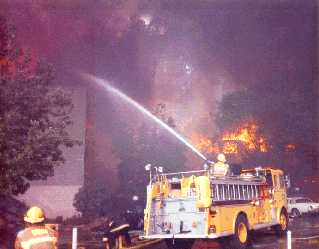 An otherwise minor accident when not wearing proper safety gear can be fatal. Years ago my neighbor was killed when she struck her head while training a horse. A boarder in our stable had to have facial reconstruction when she was having fun at a nearby show barn. Serious injuries became so common that in the 1980s a collection of entities including Harbor View Medical Center, John Muir Trauma Center, California Shock Trauma Air Rescue, Regional Ambulance Company, local fire agencies and two boarding and training facilities (including KBR) launched the "Equestrian Crash Course." Data showed that most equestrian deaths and debilitating injuries resulted from two causes: no proper head protection and mishandling of ropes. One thing I have learned from 30 years in the fire service and 20+ years of training horses is to use proper protective gear and to consider the potential consequences before deciding what to do.
| THE FOUNDATION FOR THIS PRESENTATION |
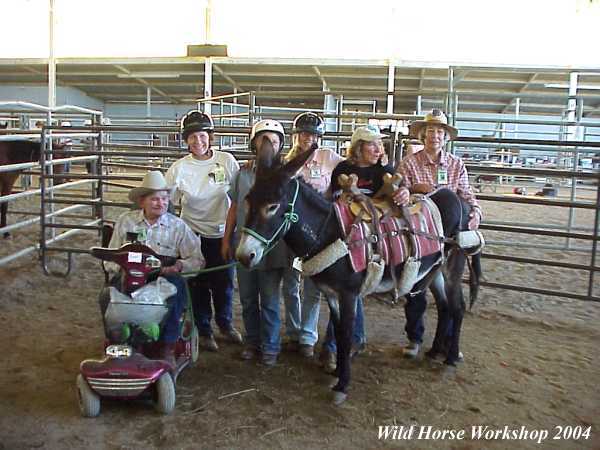
The Wild Horse Mentoring Project was first conceived by the late Barbara Eustis-Cross in the early 1990s. We knew a fellow named Pat Parelli and found that his philosophy and approaches worked extremely well with wild horses. In 1998 the mentoring project expanded into formal workshops involving truckloads of wild horses. The principal contributors to the development of our curriculum were the Parelli organization, Frank Bell, the late John Sharp (who while in is 90s was still gentling wild horses and burros from an electric wheelchair,) and Robert Denlinger.
John Sharp and his team with Mariah, a burro that was stark wild 3 days earlier
|